When a person is struggling to breathe or their body is not receiving enough oxygen, every second counts. Oxygen therapy is an important part of emergency care and can significantly improve outcomes for patients experiencing respiratory distress, cardiac emergencies, trauma, or other life-threatening conditions.
While oxygen is commonly associated with ambulances and hospitals, it is also used by trained first aiders, workplace emergency responders, aquatic staff, lifeguards, sporting organisations, and emergency response teams throughout Australia.
Understanding when oxygen should be administered—and when it should not—is an essential skill taught in advanced first aid and resuscitation training.
What Is Oxygen Therapy?
Oxygen therapy is the administration of medical-grade oxygen to a casualty whose body is not receiving enough oxygen naturally.
The purpose of oxygen therapy is to:
- Increase oxygen levels in the bloodstream
- Reduce the workload on the lungs and heart
- Improve oxygen delivery to vital organs
- Help prevent deterioration while awaiting emergency medical care
Medical oxygen contains a much higher concentration of oxygen than normal air.
- Normal air contains approximately 21% oxygen
- Medical oxygen supplied from a cylinder is typically close to 100% oxygen
This increased concentration helps support patients suffering from serious illness or injury.
Why Is Oxygen So Important?
Every cell in the human body requires oxygen to function properly.
Without adequate oxygen:
- Brain cells begin to suffer damage within minutes.
- The heart cannot pump efficiently.
- Organs begin to fail.
- The risk of cardiac arrest increases.
Providing supplemental oxygen can help maintain oxygen delivery until advanced medical care arrives.
When Is Oxygen Therapy Used?
Oxygen may be appropriate for a range of emergency situations including:
Cardiac Arrest
During CPR and advanced resuscitation, oxygen supports ventilation and improves oxygen delivery once circulation is restored.
Chest Pain or Suspected Heart Attack
Some patients experiencing cardiac events may benefit from oxygen if they have low oxygen levels or signs of respiratory distress.
Breathing Difficulties
Examples include:
- Asthma attacks
- COPD exacerbations
- Severe allergic reactions
- Pneumonia
- Respiratory infections
Near Drowning
Aquatic emergencies frequently involve oxygen deprivation.
Lifeguards and aquatic emergency teams often administer oxygen while awaiting ambulance crews.
Major Trauma
Patients with:
- Significant bleeding
- Chest injuries
- Head injuries
- Multiple trauma
may require oxygen to assist tissue oxygenation.
Shock
Shock reduces oxygen delivery throughout the body.
Supplemental oxygen can help support the patient while emergency treatment continues.
Who Can Administer Oxygen?
Medical oxygen should only be administered by people who have received appropriate training and who are authorised under workplace procedures or local regulations.
Examples include:
- First aid officers
- Workplace emergency response teams
- Lifeguards
- Aquatic facility staff
- Sports trainers
- Event medical personnel
- Emergency responders
- Healthcare professionals
Training includes:
- Patient assessment
- Oxygen safety
- Equipment operation
- Infection control
- Monitoring patient response
Oxygen Delivery Equipment
Several pieces of equipment are commonly used.
Oxygen Cylinder
Portable cylinders contain compressed medical oxygen.
They are available in several sizes depending on workplace or emergency requirements.
Regulator
The regulator controls:
- Cylinder pressure
- Flow rate
- Remaining oxygen supply
Flow Meter
Allows oxygen delivery to be adjusted according to the casualty’s needs.
Masks
Different masks are used depending on the patient’s condition.
Examples include:
- Non-rebreather masks
- Simple face masks
- Pocket masks with oxygen inlet
- Bag Valve Mask (BVM)
Each provides oxygen differently depending on the casualty’s breathing ability.
Oxygen During CPR
One of the most important uses of oxygen is during resuscitation.
When a casualty is not breathing normally:
- CPR is commenced immediately.
- An AED is attached as soon as available.
- Oxygen may be connected to ventilation equipment by trained responders.
- Ventilations continue while compressions are maintained.
Combining high-quality CPR with oxygen and early defibrillation provides the best chance of survival.
Oxygen Therapy in Aquatic Emergencies
Oxygen plays a major role in aquatic rescue.
People rescued from pools, rivers, lakes or beaches may have experienced:
- Lack of oxygen
- Water inhalation
- Respiratory distress
- Cardiac arrest
Many aquatic facilities throughout Australia maintain oxygen kits as part of their emergency equipment.
Lifeguards receive training in oxygen administration alongside CPR and advanced resuscitation skills.
Safety When Using Oxygen
Although oxygen itself does not burn, it greatly increases the intensity of fire.
Important safety rules include:
- Never smoke near oxygen equipment.
- Keep oxygen away from naked flames.
- Store cylinders securely.
- Avoid grease or oil on fittings.
- Regularly inspect equipment.
- Ensure cylinders are within service dates.
Proper maintenance is essential for safe operation.
Oxygen Therapy Training
Many workplaces choose to include oxygen therapy as part of advanced first aid training.
Participants learn how to:
- Assess breathing
- Recognise oxygen deficiency
- Assemble oxygen equipment
- Operate regulators
- Select appropriate masks
- Monitor casualty response
- Apply infection control
- Maintain equipment
- Work safely around compressed oxygen
Practical training develops confidence for real emergency situations.
Why Advanced Resuscitation Training Matters
Advanced resuscitation courses expand on standard CPR training by introducing oxygen therapy and other advanced life support techniques.
These courses are particularly valuable for:
- Lifeguards
- Aquatic centres
- Sporting organisations
- Mining and construction industries
- Emergency response teams
- High-risk workplaces
- Schools
- Community organisations
Proper training helps responders provide a higher level of care before paramedics arrive.
Learn Advanced Oxygen Therapy Skills
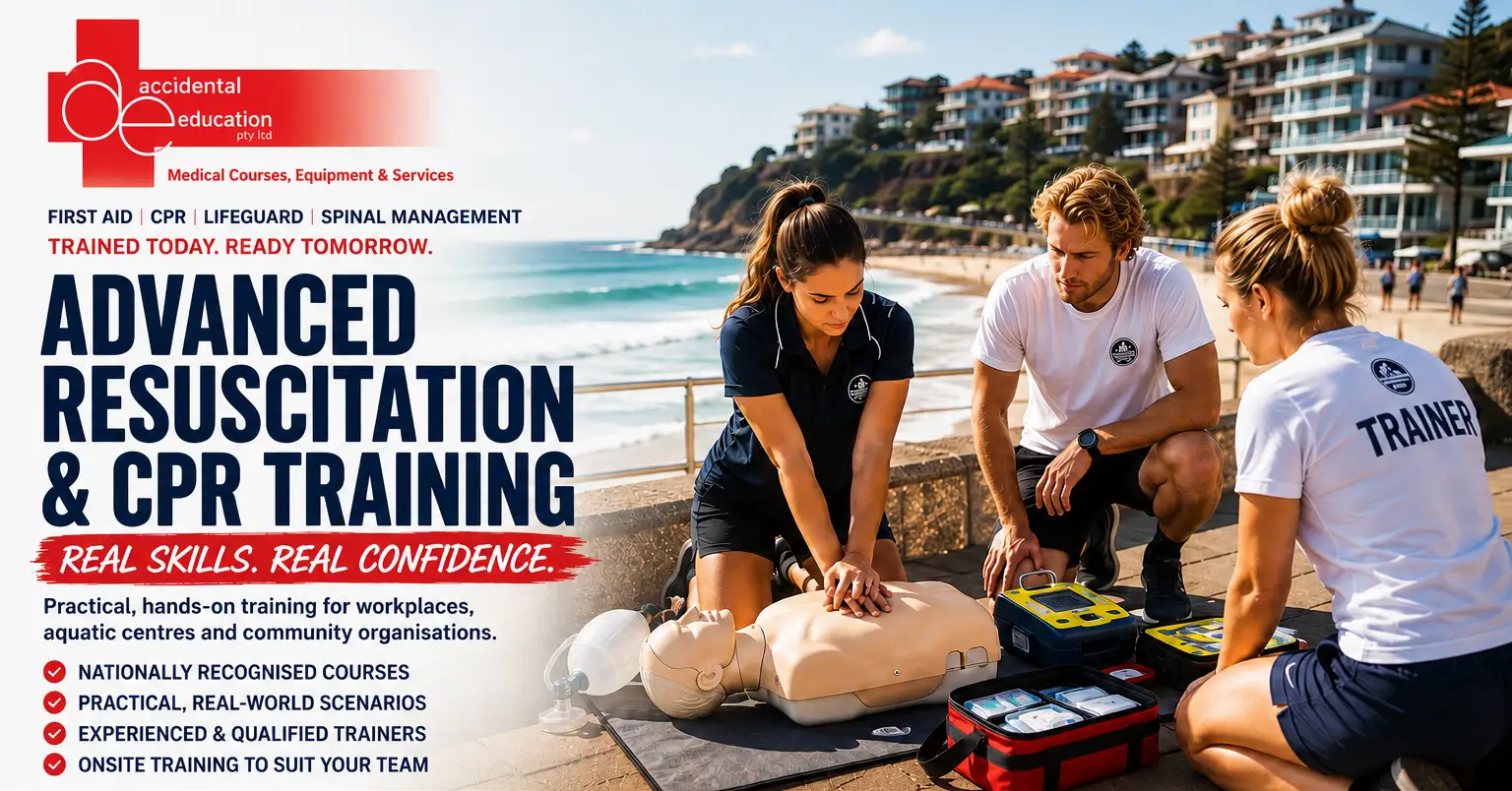
At Accidental Education, we deliver practical advanced resuscitation training that includes the safe use of oxygen equipment, airway management principles, emergency response procedures, and real-world scenarios.
Our nationally recognised training is designed for workplaces, aquatic facilities, sporting organisations, councils, and emergency response teams across New South Wales.
If you’re looking to expand your emergency response skills, our Advanced Resuscitation courses provide the knowledge and hands-on experience needed to respond confidently in critical situations.
Frequently Asked Questions
No. Oxygen is generally reserved for specific medical emergencies and should only be administered by trained personnel when appropriate.
No. Oxygen administration should only be performed by people who have received suitable training and are authorised under workplace procedures or local requirements.
Standard CPR courses do not usually include oxygen administration. It is commonly taught in advanced resuscitation training.
This depends on the cylinder size and the flow rate being used. Larger cylinders and lower flow rates provide oxygen for longer periods.
With professional training and practical instruction, most participants can learn to safely operate oxygen equipment and administer oxygen in emergency situations.