When someone is injured or becomes seriously ill, most people genuinely want to help. Unfortunately, good intentions don’t always lead to the right actions. Many common first aid mistakes happen because people panic, rely on outdated advice or simply haven’t received proper training.
Incorrect first aid can delay treatment, make injuries worse or place both the casualty and the responder at unnecessary risk.
The good news is that these mistakes are largely preventable. With quality training and regular refresher courses, you can develop the confidence and practical skills needed to respond safely and effectively.
Here are some of the most common first aid mistakes—and how to avoid them.
Panicking Instead of Taking Control
The biggest mistake during any emergency is allowing panic to take over.
Stress can cause people to:
- Forget basic procedures
- Miss important hazards
- Delay calling for help
- Make rushed decisions
Good first aid training teaches participants to follow a structured approach, such as the DRSABCD Action Plan, helping them stay calm and prioritise the most important actions first.
Not Checking for Danger
Many people rush straight to the casualty without considering their own safety.
Potential dangers include:
- Electrical hazards
- Fire
- Traffic
- Falling objects
- Chemicals
- Water hazards
- Violent behaviour
Remember, if you become injured, you can no longer help the casualty.
Always make sure the scene is safe before approaching.
Waiting Too Long to Call Triple Zero (000)
Some people hesitate because they think the casualty “might be okay.”
In serious emergencies, delays can be dangerous.
Always call Triple Zero (000) immediately if someone is:
- Unconscious
- Not breathing normally
- Having chest pain
- Showing signs of stroke
- Experiencing severe bleeding
- Having a seizure lasting several minutes
- Suffering a major trauma
It’s always better to seek professional advice early.
Performing Poor Quality CPR
CPR saves lives—but only when performed correctly.
Common CPR mistakes include:
- Compressing too slowly
- Compressing too shallow
- Incorrect hand placement
- Frequently stopping compressions
- Failing to allow full chest recoil
Regular CPR refresher training helps maintain proper technique and confidence.
Being Afraid to Use an AED
Many people worry they’ll hurt someone by using an Automated External Defibrillator (AED).
Modern AEDs are extremely safe.
They:
- Provide clear voice prompts
- Analyse the patient’s heart rhythm
- Only deliver a shock when appropriate
- Guide users step by step
If an AED is available during a cardiac arrest, it should be used as soon as possible alongside CPR.
Moving Someone With a Suspected Spinal Injury
Moving an injured person unnecessarily can worsen a spinal injury.
If you suspect a spinal injury because of:
- A fall
- A diving incident
- A sporting collision
- A vehicle accident
- A heavy impact
Try to keep the person still and support their head and neck while waiting for emergency services, unless there is an immediate danger that requires moving them.
Using Outdated First Aid Advice
First aid recommendations change as medical evidence improves.
Examples of outdated advice include:
- Putting butter on burns
- Forcing objects into the mouth during a seizure
- Encouraging someone with a nosebleed to lean backwards
- Using tourniquets incorrectly
- Delaying CPR while searching for a pulse
Nationally recognised training helps ensure you’re following current Australian first aid guidelines.
Not Controlling Severe Bleeding Quickly
Uncontrolled bleeding can become life-threatening within minutes.
A common mistake is underestimating blood loss or failing to apply enough pressure.
Proper first aid involves:
- Applying firm direct pressure
- Using appropriate dressings
- Keeping pressure on the wound
- Seeking emergency medical assistance when required
Training teaches the correct techniques for managing serious bleeding safely.
Forgetting to Reassure the Casualty
People often focus entirely on the physical injury and forget the emotional impact of an emergency.
Simple reassurance can help:
- Reduce anxiety
- Keep the casualty calm
- Encourage cooperation
- Improve communication
Speaking calmly and confidently is an important part of effective first aid.
Assuming Someone Else Will Help
During emergencies, people sometimes assume another person has already called an ambulance or knows what to do.
This is known as the bystander effect.
Good first aiders take initiative by:
- Calling Triple Zero (000)
- Asking someone to retrieve the AED
- Directing others to assist
- Beginning first aid immediately
Clear communication prevents confusion and delays.
How Training Prevents These Mistakes
The best way to avoid first aid mistakes is through regular practical training.
Quality courses provide opportunities to:
- Practise CPR
- Use an AED
- Manage emergencies
- Build confidence
- Improve communication
- Receive instructor feedback
- Work through realistic scenarios
Confidence comes from practice—not simply reading about first aid.
Why Refresher Training Matters
Skills fade over time.
Annual CPR refreshers and regular First Aid renewal courses help participants maintain:
- Correct CPR technique
- AED confidence
- Emergency decision-making
- Teamwork
- Casualty assessment
- Knowledge of current guidelines
The more frequently skills are practised, the more likely they are to be remembered during a real emergency.
Why Choose Accidental Education?
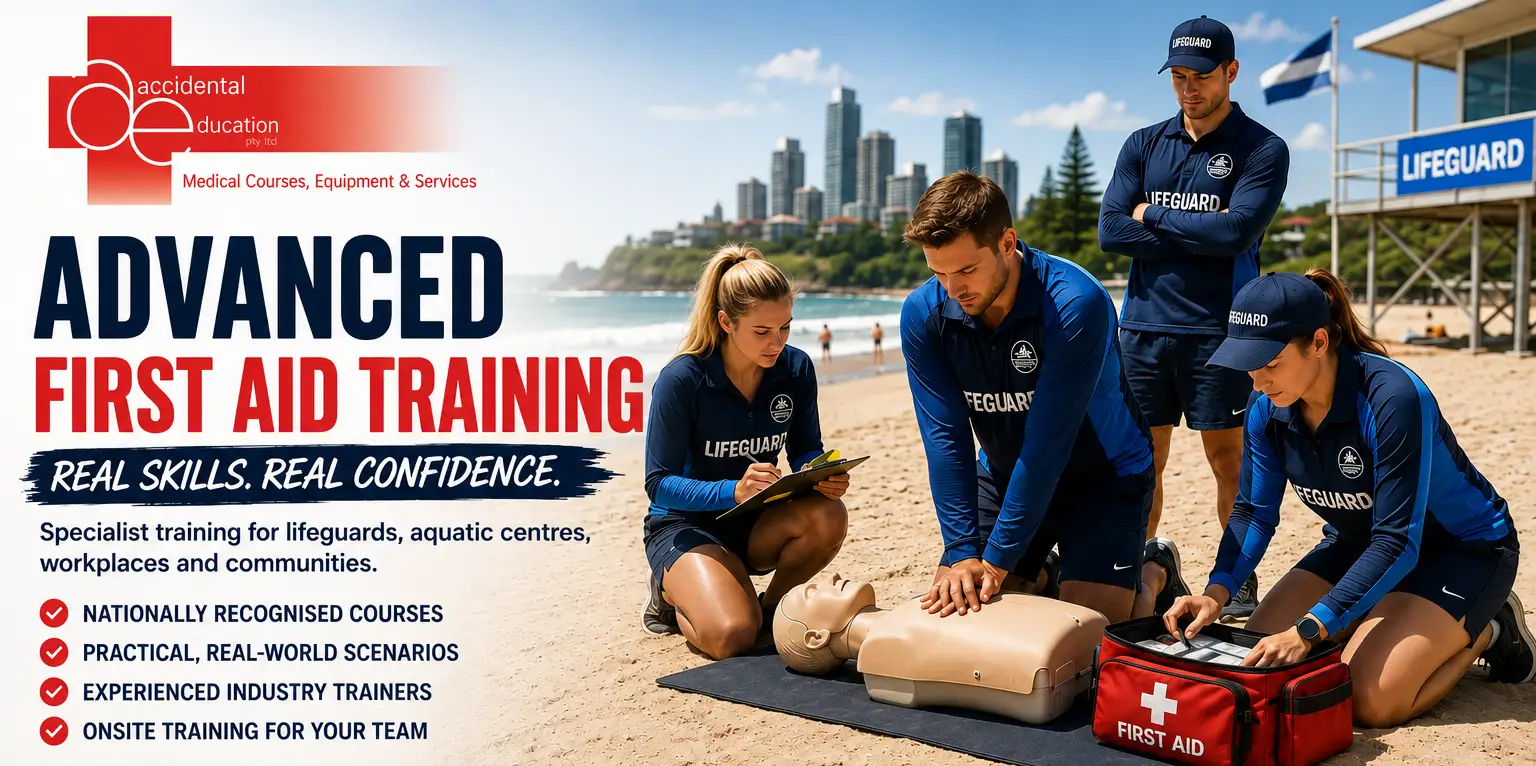
At Accidental Education, we focus on practical, hands-on learning that prepares participants for real emergencies.
Our experienced instructors deliver nationally recognised training through our partnering Registered Training Organisation (RTO #40833), alongside specialised professional development courses for workplaces, councils, schools, aquatic centres, sporting clubs and emergency response teams throughout New South Wales.
We provide:
- First Aid Training
- CPR Training
- Advanced First Aid
- Advanced Resuscitation
- Workplace AED Training
- Spinal Management
- Pool Lifeguard Training
- Green Whistle (Methoxyflurane) Administration Training
- Refresher Courses
Every course is designed to develop confident responders who can remain calm and provide effective assistance during emergencies.
Final Thoughts
Mistakes during emergencies are often caused by panic, lack of confidence or outdated information—not a lack of willingness to help.
The good news is that proper training can dramatically reduce these mistakes. By learning current first aid techniques, practising realistic scenarios and refreshing your skills regularly, you’ll be far better prepared to respond safely when someone needs your help.
The confidence gained through practical first aid training can make a genuine difference—not only in the workplace, but also at home, on the sporting field and in your community.
Want the confidence to respond correctly during an emergency?
Accidental Education provides practical, nationally recognised First Aid and CPR training throughout New South Wales.
We deliver flexible onsite training for workplaces, councils, schools, sporting clubs, healthcare providers and aquatic facilities.
📞 Call 0410 847 457
or
Contact us today to arrange First Aid training tailored to your organisation.