Cardiopulmonary Resuscitation (CPR) is one of the most valuable life-saving skills anyone can learn. Every year, thousands of Australians experience sudden cardiac arrest at home, in the workplace, at sporting events and in public places. Without immediate intervention, survival rates decrease rapidly with every passing minute.
The good news is that ordinary people can make an extraordinary difference. By recognising a cardiac arrest, calling Triple Zero (000), starting CPR immediately and using an Automated External Defibrillator (AED) as soon as possible, bystanders can significantly improve a person’s chances of survival.
At Accidental Education, we believe CPR training gives people more than just a qualification—it provides the confidence to take action when someone needs help the most.
What Is CPR?
CPR, or Cardiopulmonary Resuscitation, is an emergency procedure used when a person’s heart has stopped beating effectively or they have stopped breathing normally.
CPR involves:
- Chest compressions
- Rescue breaths (where appropriate)
- Using an Automated External Defibrillator (AED) when available
Chest compressions help circulate oxygen-rich blood to the brain and other vital organs until the heart can be restarted or emergency medical care arrives.
What Is Cardiac Arrest?
Cardiac arrest occurs when the heart suddenly stops pumping blood around the body.
Without immediate treatment:
- The brain begins to suffer damage within minutes.
- Oxygen can no longer reach vital organs.
- The chance of survival decreases rapidly.
Cardiac arrest is different from a heart attack.
A heart attack occurs when blood flow to part of the heart is blocked.
A cardiac arrest occurs when the heart suddenly stops functioning effectively.
However, a heart attack can sometimes lead to cardiac arrest.
Every Minute Matters
Time is critical during cardiac arrest.
Without CPR or defibrillation:
- Survival decreases significantly with each passing minute.
- Permanent brain injury can occur within minutes.
- The chances of recovery become much lower the longer treatment is delayed.
Immediate CPR helps maintain blood circulation until emergency services arrive.
When CPR is combined with early defibrillation using an AED, survival rates improve dramatically.
How CPR Helps
Although CPR cannot usually restart the heart on its own, it performs an incredibly important job.
Effective CPR:
- Keeps oxygen moving around the body.
- Helps protect the brain.
- Maintains blood flow to vital organs.
- Increases the effectiveness of defibrillation.
- Buys valuable time until professional medical care arrives.
Without CPR, the body quickly begins to suffer irreversible damage.
The Importance of AEDs
An Automated External Defibrillator (AED) analyses the heart’s rhythm and, if appropriate, delivers an electrical shock designed to restore a normal rhythm.
Modern AEDs are:
- Safe
- Easy to use
- Fully automated
- Voice-guided
- Suitable for use by trained members of the public
Many workplaces, schools, shopping centres, sporting clubs and community facilities now have AEDs available.
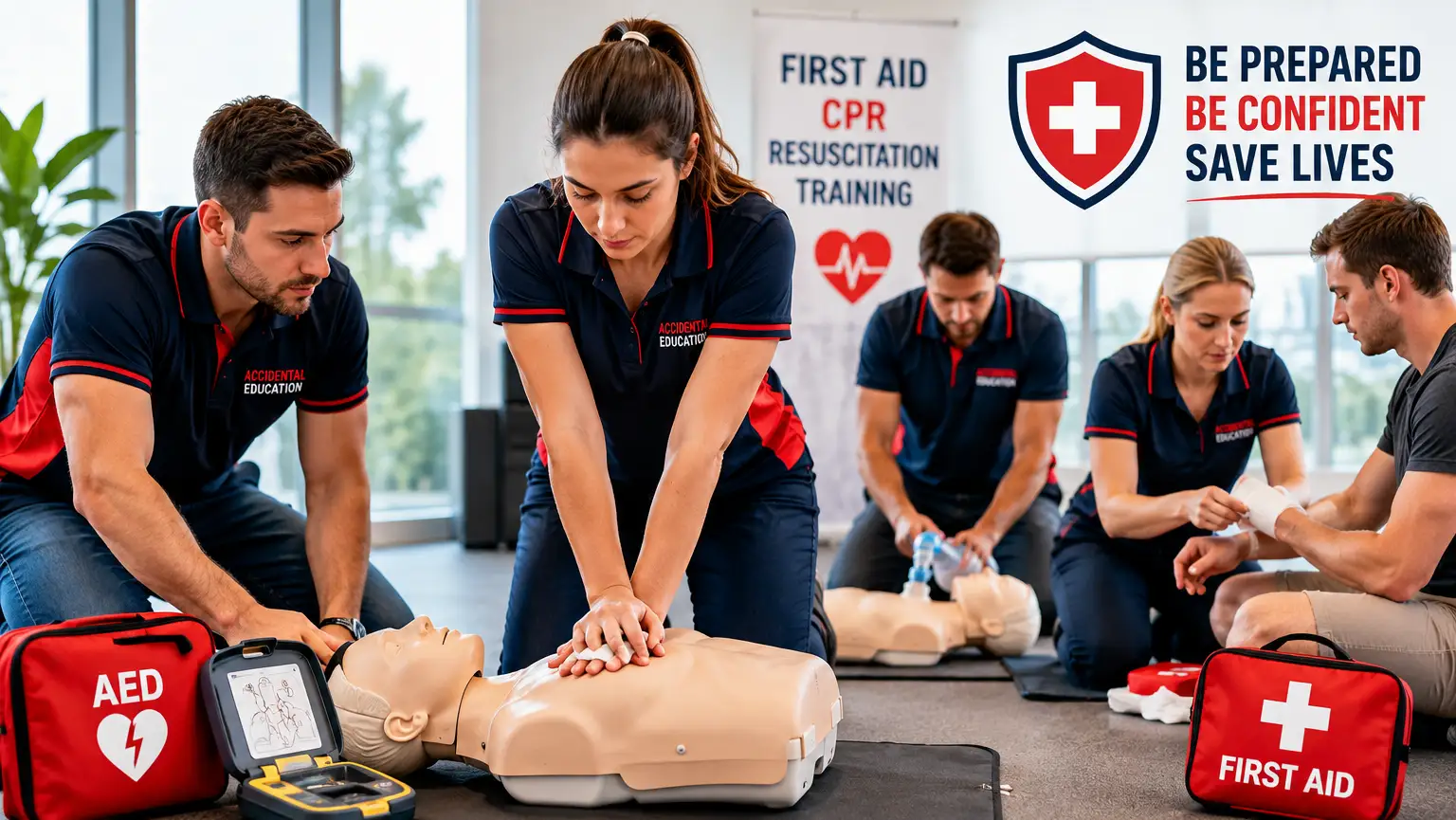
Learning how to use an AED alongside CPR is an essential part of emergency response training.
Anyone Can Learn CPR
One of the biggest misconceptions is that CPR is only for healthcare professionals.
In reality, CPR training is suitable for almost everyone.
Participants include:
- Workplace employees
- Teachers
- Childcare educators
- Parents
- Grandparents
- Coaches
- Lifeguards
- Council staff
- Healthcare workers
- Sporting club volunteers
- Community members
You don’t need a medical background to learn CPR.
With quality training, almost anyone can develop the confidence to respond during an emergency.
Confidence Makes the Difference
During a real emergency, many people hesitate because they are unsure what to do.
Quality CPR training helps participants:
- Recognise cardiac arrest quickly.
- Remain calm under pressure.
- Perform effective chest compressions.
- Use an AED confidently.
- Work as part of an emergency response team.
- Communicate with Triple Zero (000) operators.
Confidence often determines whether someone acts immediately—and those first few moments can save a life.
CPR Saves Lives Beyond the Workplace
Although many people complete CPR training for work, these skills are just as valuable in everyday life.
You may one day use CPR to help:
- A family member.
- A friend.
- A neighbour.
- A sporting teammate.
- A customer.
- A complete stranger.
Cardiac arrest can happen anywhere and at any time.
Knowing CPR means you’re prepared wherever you are.
Why Annual CPR Refresher Training Matters
CPR is a practical skill that requires regular practice.
The Australian Resuscitation Council recommends CPR skills be refreshed every 12 months.
Annual refresher training helps participants:
- Maintain correct compression technique.
- Stay up to date with current guidelines.
- Improve confidence.
- Practise AED operation.
- Reinforce emergency decision-making.
- Build muscle memory.
Regular practice ensures you’re ready to respond when every second counts.
Choosing the Right CPR Training Provider
When selecting a CPR training provider, look for:
- Nationally recognised courses delivered through a partnering Registered Training Organisation (RTO #40833).
- Experienced instructors.
- Practical, hands-on learning.
- Realistic emergency scenarios.
- Modern training equipment.
- Small class sizes.
- Flexible onsite workplace delivery.
- Annual refresher training options.
Practical training prepares participants for real emergencies—not simply certification.
Why Choose Accidental Education?
At Accidental Education, we deliver engaging, practical CPR training designed to build real confidence.
Our nationally recognised CPR courses are delivered through our partnering Registered Training Organisation (RTO #40833) and are suitable for workplaces, councils, schools, aquatic centres, sporting clubs, healthcare providers and community organisations throughout New South Wales.
Our training includes:
- CPR Training
- First Aid Training
- Advanced First Aid
- Advanced Resuscitation & Oxygen Therapy
- Workplace AED Training
- Pool Lifeguard Training
- Spinal Management
- Green Whistle (Methoxyflurane) Administration Training
- Annual CPR Refresher Courses
Every course focuses on practical skills that prepare participants to respond confidently during real emergencies.
Final Thoughts
Learning CPR is one of the most important investments you can make—not only for your workplace but for your family and community.
Cardiac arrest can occur without warning, but immediate CPR and early defibrillation can dramatically improve survival. The confidence gained through quality training enables ordinary people to become first responders during life’s most critical moments.
You may never know when your skills will be needed, but if that moment comes, your training could make the difference between life and death.
Ready to learn a skill that could save a life?
Accidental Education delivers practical, nationally recognised CPR training across New South Wales.
We provide flexible onsite training for businesses, councils, schools, healthcare providers, sporting clubs, aquatic facilities and community organisations.
📞 Call 0410 847 457
or
Contact us today to book your CPR training or organise workplace CPR courses anywhere in New South Wales.