If you completed a CPR course many years ago, you may be surprised to learn that the techniques taught today are different from those taught in the past.
Medical research continues to improve our understanding of how to maximise survival during cardiac arrest. As new evidence becomes available, the Australian Resuscitation Council (ARC) regularly reviews and updates its recommendations to reflect current best practice.
These updates are one of the main reasons why annual CPR refresher training is strongly recommended. Keeping your skills current ensures you can respond with confidence and provide care using the latest evidence-based techniques.
At Accidental Education, our nationally recognised CPR courses are delivered in accordance with current Australian Resuscitation Council guidelines, giving participants practical, up-to-date skills they can rely on during real emergencies.
Why CPR Guidelines Change
Medicine is constantly evolving.
Researchers around the world study thousands of real cardiac arrest cases every year to determine which techniques provide the greatest chance of survival.
Guidelines are updated to improve:
- Patient survival
- Brain protection
- CPR effectiveness
- Defibrillation success
- Rescuer safety
- Ease of learning
- Public confidence
- Team communication
These evidence-based improvements help ensure CPR remains as effective as possible.
From Complex Procedures to Simpler CPR
Many years ago, CPR training involved remembering complex sequences that could be difficult during stressful emergencies.
Modern CPR guidelines focus on:
- Simplicity
- Speed
- Consistency
- Confidence
- Early action
Today’s approach encourages bystanders to start CPR immediately rather than worrying about remembering complicated procedures.
The goal is simple:
Start CPR early and continue until professional help arrives or the person recovers.
Greater Emphasis on High-Quality Chest Compressions
Research has shown that high-quality chest compressions are one of the most important parts of CPR.
Current training focuses on:
- Correct hand placement
- Appropriate compression depth
- Consistent compression rate
- Allowing full chest recoil
- Minimising interruptions
- Maintaining quality throughout resuscitation
These techniques help maintain blood flow to the brain and vital organs while waiting for advanced medical care.
Increased Use of Automated External Defibrillators (AEDs)
One of the biggest developments in emergency response has been the widespread availability of Automated External Defibrillators (AEDs).
AEDs are now commonly found in:
- Workplaces
- Shopping centres
- Airports
- Schools
- Aquatic centres
- Sporting clubs
- Community facilities
- Government buildings
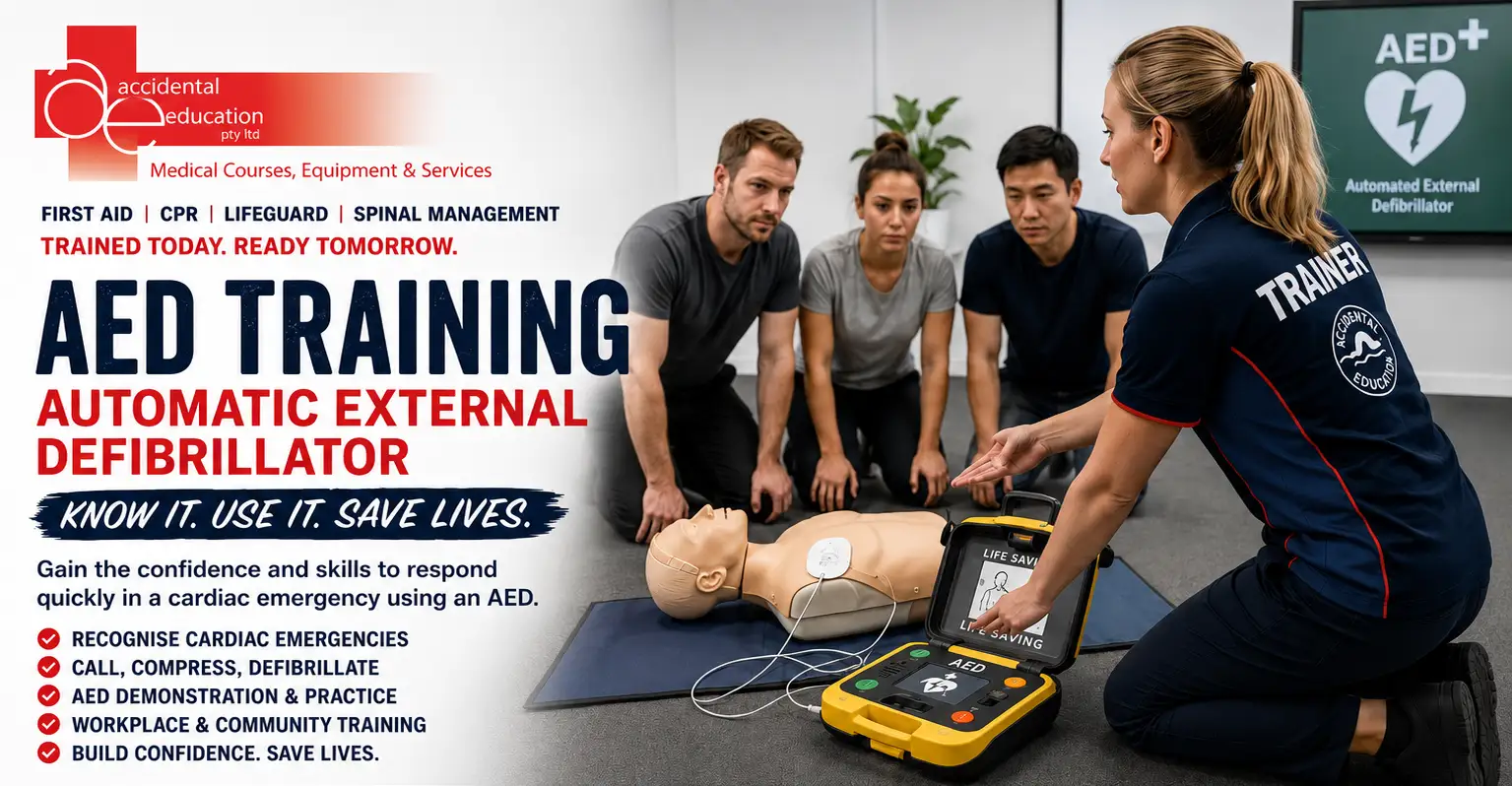
Modern CPR courses place significant emphasis on recognising when an AED should be used and how to operate one safely and confidently.
Hands-Only CPR Awareness
Public awareness campaigns have encouraged more people to act during cardiac emergencies.
Where appropriate, current training also discusses hands-only CPR as an option for bystanders who are unwilling or unable to provide rescue breaths.
The most important message is:
Doing something is almost always better than doing nothing.
Participants also learn when full CPR, including rescue breaths, is recommended as part of their formal training.
Improved Team-Based CPR
Modern emergency response recognises that many cardiac arrests involve multiple responders.
Training now includes:
- Team communication
- Role allocation
- Rotating compressors
- Coordinating AED use
- Clear verbal communication
- Efficient casualty management
These improvements help reduce fatigue and maintain CPR quality during prolonged resuscitation.
Stronger Focus on Early Recognition
Modern CPR training places greater emphasis on recognising cardiac arrest quickly.
Participants learn how to identify:
- Unresponsiveness
- Abnormal or absent breathing
- Agonal breathing (occasional gasping)
- The need for immediate action
Early recognition means CPR can begin sooner, improving the patient’s chances of survival.
Improved Training Methods
CPR training itself has evolved considerably.
Modern courses include:
- Realistic scenarios
- High-quality CPR manikins
- AED training devices
- Instructor feedback
- Practical teamwork exercises
- Workplace-specific simulations
- Interactive learning
These methods help participants develop practical confidence rather than simply memorising theory.
Why Annual Refresher Training Matters
Even though CPR techniques are straightforward, research shows that practical skills decline without regular practice.
Annual refresher training helps participants:
- Maintain correct technique
- Stay current with guideline updates
- Improve confidence
- Practise AED operation
- Build muscle memory
- Receive instructor feedback
- Refresh emergency decision-making
The Australian Resuscitation Council recommends refreshing CPR skills every 12 months.
Common Myths About CPR
Some outdated beliefs still exist.
Examples include:
Myth: CPR rarely works.
Reality: Immediate CPR significantly improves survival when combined with early defibrillation.
Myth: Only healthcare professionals should perform CPR.
Reality: Anyone with training can provide CPR until emergency services arrive.
Myth: You’ll hurt someone by using an AED.
Reality: AEDs analyse the heart rhythm and only deliver a shock if required.
Myth: You need to remember complicated procedures.
Reality: Modern CPR training focuses on practical, simple and effective actions.
Why Choose Accidental Education?
At Accidental Education, our CPR courses reflect current Australian Resuscitation Council recommendations and focus on building practical confidence.
We deliver nationally recognised CPR training through our partnering Registered Training Organisation (RTO #40833) throughout New South Wales.
Our services include:
- CPR Training
- CPR Refresher Courses
- First Aid Training
- Advanced First Aid
- Advanced Resuscitation & Oxygen Therapy
- Workplace AED Training
- Pool Lifeguard Training
- Spinal Management
- Green Whistle (Methoxyflurane) Administration Training
Our experienced instructors use realistic scenarios and modern equipment to ensure every participant leaves prepared to respond confidently during an emergency.
Final Thoughts
CPR has changed significantly over the years, but the goal has always remained the same—to keep someone alive until professional medical help arrives.
Modern guidelines are based on extensive research and focus on making CPR simpler, more effective and easier for everyday Australians to perform. By attending regular refresher training, you can stay up to date with current best practice and maintain the confidence to act when every second counts.
When someone suffers a cardiac arrest, your knowledge and willingness to help could save a life.
Call to Action
Keep your CPR skills current with practical, nationally recognised training from Accidental Education.
We deliver flexible onsite CPR training and refresher courses for businesses, councils, schools, healthcare providers, sporting clubs, aquatic facilities and community organisations across New South Wales.
📞 Call 0410 847 457
or
Contact us today to book your CPR training or arrange workplace refresher courses.